
Good to Know
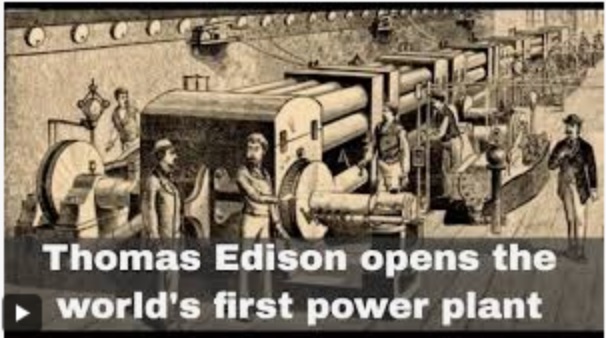
The world’s First Thermal Generating Station
The world’s First Thermal Generating Station)
In January 1882, London, England, Thomas Edison, famous for inventing the light bulb, built the world’s first public power station. It was called the Edison Electric Light Station, and it changed the way people lived forever. Before this station, people mostly used candles, oil lamps, or gas lights to light their homes and streets. These were messy, dim, and sometimes dangerous. Edison wanted to give people a cleaner, safer, and brighter way to light up their lives—using electricity. To make this work, Edison teamed up with Edward Johnson, one of his close partners. Together, they built a special kind of power station that used coal to create steam. This steam powered a big machine called a steam engine, which turned another machine called a generator. The generator made electricity, which was sent through underground pipes to nearby homes and businesses. The station used a Babcock & Wilcox boiler to heat water and make steam. The steam engine was strong—it could produce 93 kilowatts, which was a lot of power back then. The generator it turned weighed 27 tonnes, about as heavy as four elephants!

Source: https://www.theengineeringchoice.com/what-is-babcock-and-wilcox-boiler/
This was the first time electricity was made in one place and shared with the public. It showed the world that electric power wasn’t just for experiments—it could be used in everyday life. Thanks to Edison’s station, cities could become brighter, safer, and more modern. The Edison Electric Light Station was a big step toward the power plants we use today. It proved that electricity could be produced on a large scale and shared with many people. That idea became the foundation for the modern electric power industry.
The world’s Oldest Power Station
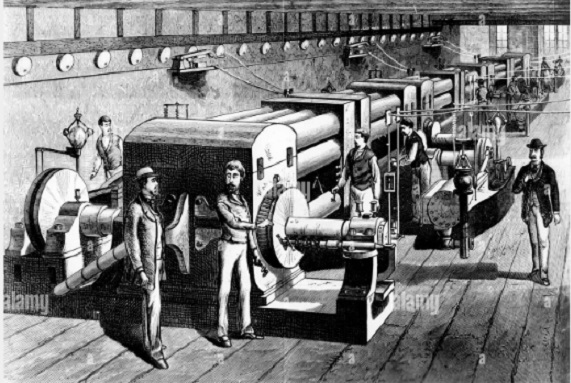
Pearl Street Power Station Central Power Plant
In 1882, Thomas Edison opened a groundbreaking power station in New York City called the Pearl Street Station. It was the first commercial power plant in the United States and one of the earliest in the world. This station marked the beginning of the electric age, bringing electricity into people’s homes and businesses for the first time. At the start, Pearl Street Station served just 59 customers and powered around 800 electric lamps. Even though that number seems small today, it was a huge step forward at the time. People were amazed to see their homes lit up by electricity instead of gas lamps or candles. The station used direct current (DC) to deliver electricity. This means the electric flow moved in one direction. Later on, another type of electricity called alternating current (AC) became more popular because it could travel longer distances more easily. So, DC eventually lost the “battle of currents,” but Pearl Street Station still played a vital role in showing that electric power could work on a large scale. Sadly, in 1890, a fire destroyed the station, and it stopped operating. But its legacy lives on. Today, the site where Pearl Street Station once stood has a plaque to honor its importance in history. It reminds us of the moment when electricity began to change the world—and how Thomas Edison helped make that happen.
The Oldest Hydro Electric Dam in Nigeria: Kainji Dam
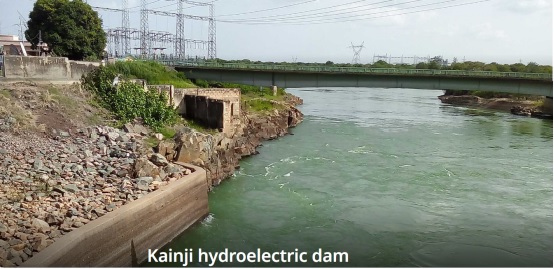
The story of the Kainji Dam begins in the 1950s, when early studies explored the possibility of harnessing the power of the Niger River to generate electricity. These investigations laid the groundwork for a formal feasibility report in the early 1960s, which confirmed that building a hydroelectric dam was both practical and promising. In 1962, the Nigerian government established the Niger Dam Authority to oversee the project, marking a major step toward realizing the country’s first large-scale hydroelectric power station. Construction of the dam began in 1964 and continued until 1968. The work was carried out by Impregilo, a consortium of Italian civil engineering firms, while the design was handled by two consulting companies—Balfour Beatty from the United Kingdom and Nedeco from the Netherlands. The scale of the project was immense, requiring over 250,000 tons of cement and more than 25,000 tons of steel. The total cost was estimated at $209 million, a significant portion of which was allocated to resettling communities affected by the dam’s construction. The creation of the dam led to the formation of Kainji Lake, a vast reservoir that dramatically altered the surrounding landscape. While the lake provided a vital source of hydroelectric power, it also came with social and environmental consequences. Approximately 50,000 people were displaced from their homes, prompting the government to build 128 new villages and two townships, including the notable New Bussa. Fertile floodplains were submerged, and the habitats of local wildlife—such as crocodiles, hippos, and manatees—were disrupted.
The world’s Oldest and Existing Power Station: Krka Hydroelectric Power Plant – Croatia
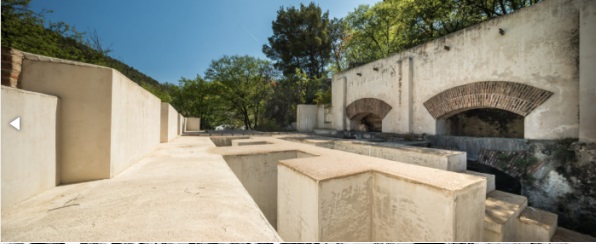
Krka Hydroelectric Power Plant – Croatia Source: https://www.npkrka.hr/en_US/kulturna-bastina/industrijska-bastina/hidroelektrana-krka/
The title of the world’s oldest existing power station is still debated, but a few historic sites
stand out for their age and importance.
⚡ Krka Hydroelectric Power Plant – Croatia The Krka hydroelectric plant, constructed in 1895 near the town of Šibenik in Croatia, was a
pioneering facility in its time. It was among the first in the world to operate using polyphase alternating current (AC), a revolutionary
electrical system developed around the same period as Nikola Tesla’s groundbreaking work. Remarkably, the plant is still in operation today,
and its original generator room has been preserved as a historical exhibit. Krka is recognized as one of the earliest examples of large-scale
hydroelectric power generation in the world.
The world’s Oldest and Existing Power Station: Dawson Falls Power Station – New Zealand
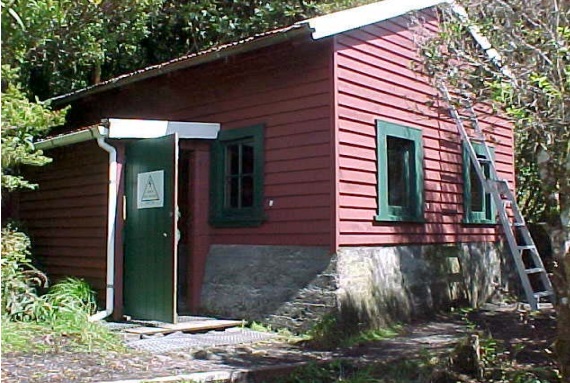
Dawson Falls Power Station – New Zealand Source: https://www.doc.govt.nz/globalassets/documents/conservation/historic/by-region/dawson-falls-presentation.pdf
Dawson Falls Power Station is a historic hydroelectric facility located in the Taranaki region of New Zealand, close to the Dawson Falls Visitor Centre. It’s especially notable for housing the country’s oldest generator that’s still in continuous operation. Built in 1934 by unemployed workers, the station was completed and began supplying electricity to this remote area within the same year. The Dawson Falls Power Station has a potential output of 74.8 kW and an actual output of about 29.5 kW, which is around 40 hp.
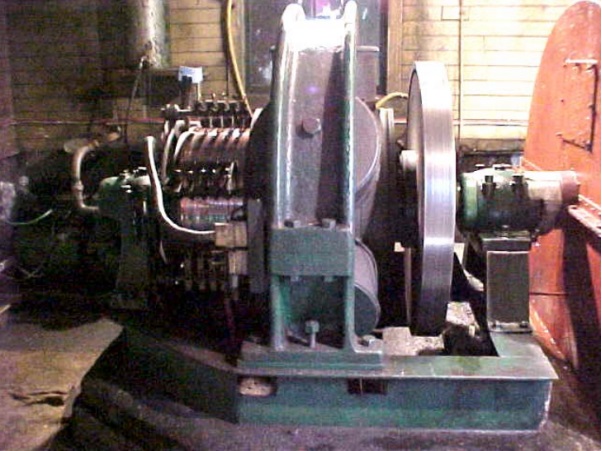
Dawson Falls Power Station Generator Source: https://www.doc.govt.nz/globalassets/documents/conservation/historic/by-region/dawson-falls-presentation.pdf
Visitors can reach the power station via Manaia Road, near the visitor centre. However, they should be prepared for sudden changes in weather and wear suitable clothing. There may also be more traffic than usual due to ongoing upgrades at the nearby Dawson Falls Lodge.
The world’s Oldest and Existing Power Station: Vulcan Street Plant – USA
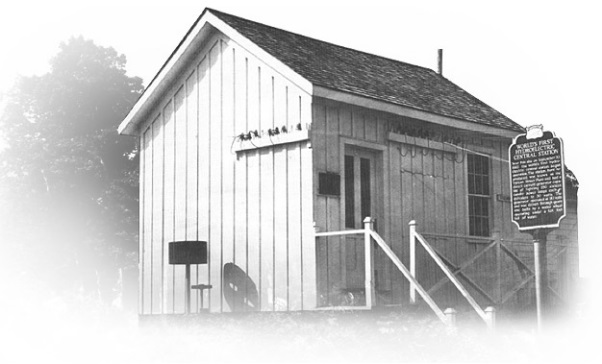
Vulcan Street Power Plant Source: https://www.asme.org/about-asme/engineering-history/landmarks/29-vulcan-street-power-plant
In 1882, a major milestone in the history of electricity took place in Appleton, Wisconsin. A small hydroelectric power station called the Vulcan Street Plant was built, becoming the first in North America to use Thomas Edison’s electric lighting system. This marked a big step forward in bringing electricity to homes and businesses. The idea came soon after Edison invented the light bulb and opened his steam-powered power station in New York. Just 26 days later, Appleton’s plant began running—not on steam, but using water power, which was cheaper and more environmentally friendly. The project was led by Henry J. Rogers, a local businessman who owned paper mills along the Fox River. He gathered support, got permission to use Edison’s technology, and built the plant next to the river. The plant used a water wheel turned by the river’s flow to power a machine called a dynamo, which generated electricity. The first places to receive this new electric power were Rogers’ two paper mills and his home, which is now the Hearthstone Historic House Museum. That house is believed to be the first in the world to be lit by electricity from a central hydroelectric source. Although the original plant burned down in 1891, its importance was remembered. In 1932, a replica was built to celebrate its 50th anniversary. Today, the site is recognized as a historic engineering landmark, and visitors can learn about its story at 530 South Vulcan Street, where the Appleton Historical Society keeps its legacy alive.
The World Oldest Nuclear Power Plants still in Use: Beznau Nuclear Power Plant – Switzerland
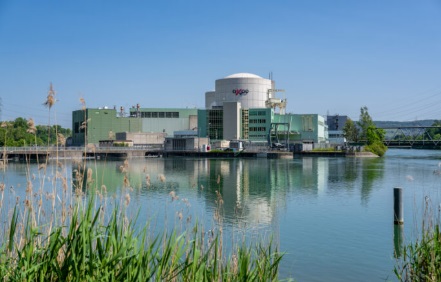
Beznau Nuclear Power Plant Source:https://ensi.admin.ch/en/topic/beznau-nuclear-power-plant/#:~:text=ENSI%20takes%20note%20of%20Axpo%27s,reactors%20are%20stable%20and%20safe.
The Beznau Nuclear Power Plant, known as Kernkraftwerk Beznau (KKB), is located in Döttingen, Switzerland, on a man-made island in the Aare River. It’s run by the Swiss energy company Axpo and is one of the oldest nuclear power plants still in use anywhere in the world. Beznau has two reactors that are the same type—pressurized water reactors. The first started working in 1969, and the second in 1972. Together, they produce up to 730 megawatts of electricity, enough to generate about 6,000 gigawatt-hours each year. Besides electricity, the plant also provides hot water for nearby homes and businesses through a system called Refuna. The plant uses water from the Aare River to cool its systems. In 2025, a heatwave made the river too warm, so the plant had to lower its output to avoid harming the river’s ecosystem. Even though Beznau is old, it’s been regularly updated. Axpo has spent more than 2.5 billion Swiss francs to keep it safe and modern. After the Fukushima disaster in Japan, extra safety steps were taken, including building a strong emergency power system that can survive earthquakes. Both reactors were reinforced to handle strong quakes. In 2015, Unit 1 was shut down for three years after flaws were found in its reactor vessel. After careful checks and improvements, it was allowed to restart in 2018 when it was proven safe. Swiss nuclear plants can keep running as long as they meet safety rules. In late 2024, Axpo announced it would spend another 350 million Swiss francs to extend Beznau’s life beyond the original 60-year plan. However, the company has now set final shutdown dates: Unit 2 will close in 2032, and Unit 1 will follow in 2033. After that, it will take about 15 years to fully dismantle the plant.
The world’s First Hydro Generation Plant
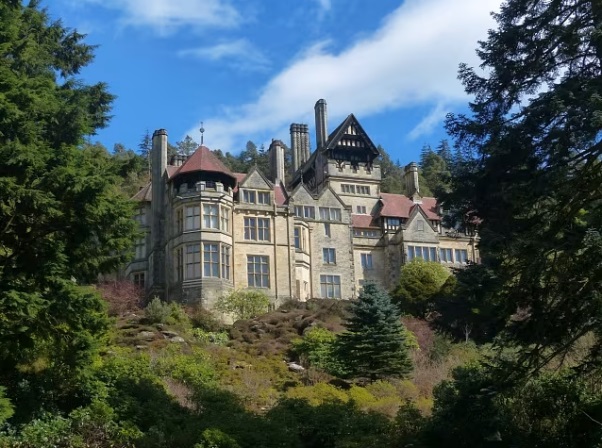
Lord Armstrong’s estate became the first home in the world lit by hydroelectricity Source: https://worldrivers.net/2025/07/27/the-earliest-hydropower-dams-in-the-world/
Hydroelectric power began in a small way in 1878, when William Armstrong used water from his estate in Cragside, England, to power a lamp in his art gallery. This was the first time electricity was made using water, but it only served his home—not the public.
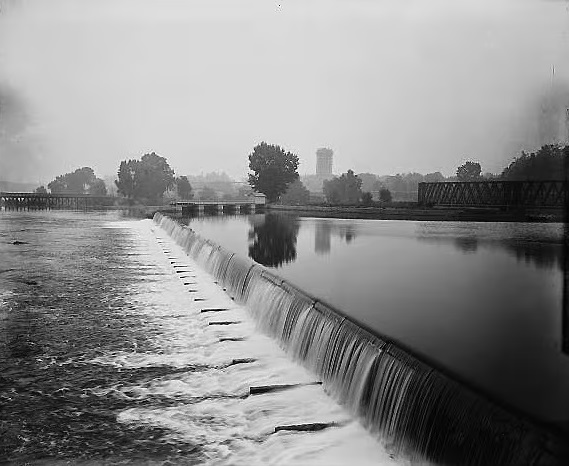
Appleton, Wisconsin, USA (1882) – The First Hydroelectric Power Plant Source: https://worldrivers.net/2025/07/27/the-earliest-hydropower-dams-in-the-world/
In 1880, the Wolverine Chair Factory in Grand Rapids, Michigan, became the first business to use water power to generate electricity. It lit up arc lamps in the factory, showing that hydropower could be used for industrial work. Then in 1882, a big step was taken in Appleton, Wisconsin. The Vulcan Street Plant became the first commercial hydroelectric power station in the world. It was built to supply electricity to homes and businesses, making it the first multi-user system.
That same year, Thomas Edison built the Pearl Street Station in New York, which used coal instead of water and helped bring electricity to cities. By 1886, hydroelectric power had spread quickly, with 45 stations operating across the U.S. and Canada. This marked the beginning of widespread use of clean, water-powered electricity.
The World’s Largest Generating Unit Today
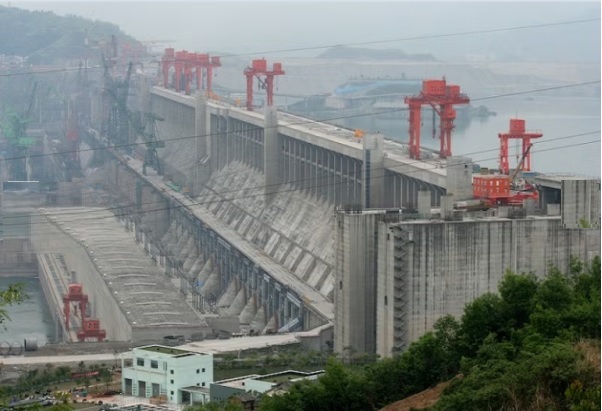
The Three Gorges Dam Project is located in the Xilingxia Gorge in Hubei province of China https://www.power-technology.com/features/feature-the-10-biggest-hydroelectric-power-plants-in-the-world/
The Three Gorges Dam is a huge power station in China. It sits on the Yangtze River in a city called Yichang, in Hubei province. This dam makes electricity by using the power of moving water. It’s called a hydroelectric dam, and it helps China in three big ways: it gives the country energy, helps stop floods, and makes it easier for boats to travel along the river. Work on the dam started in 1993 and finished in 2012. It cost about $29 billion to build. The dam is very big—about 181 meters tall and more than 2 kilometers wide. Inside, there are 32 large machines called turbines that spin when water flows through them. These turbines make electricity. There are also two smaller turbines. Some of the equipment came from companies around the world, including one called Alstom, which made 14 of the turbines. Each year, the dam produces a lot of electricity—enough to power millions of homes. The energy goes to nine provinces and two big cities, including Shanghai. Because it uses water instead of burning fuel, the dam helps reduce pollution and keeps the air cleaner. But building the dam also caused problems. A huge lake formed behind it, and more than a million people had to move from their homes. Some people worry about how the dam affects the environment and wildlife.
The World’s Largest Solar Power Plant in 2023
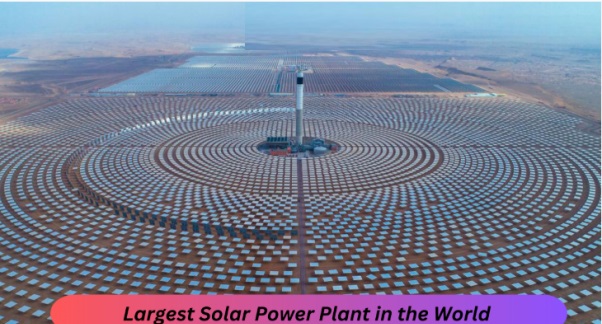
The World’s Largest Solar Power Plant in 2023 Source: https://currentaffairs.adda247.com/largest-solar-power-plant-in-the-world-2023/
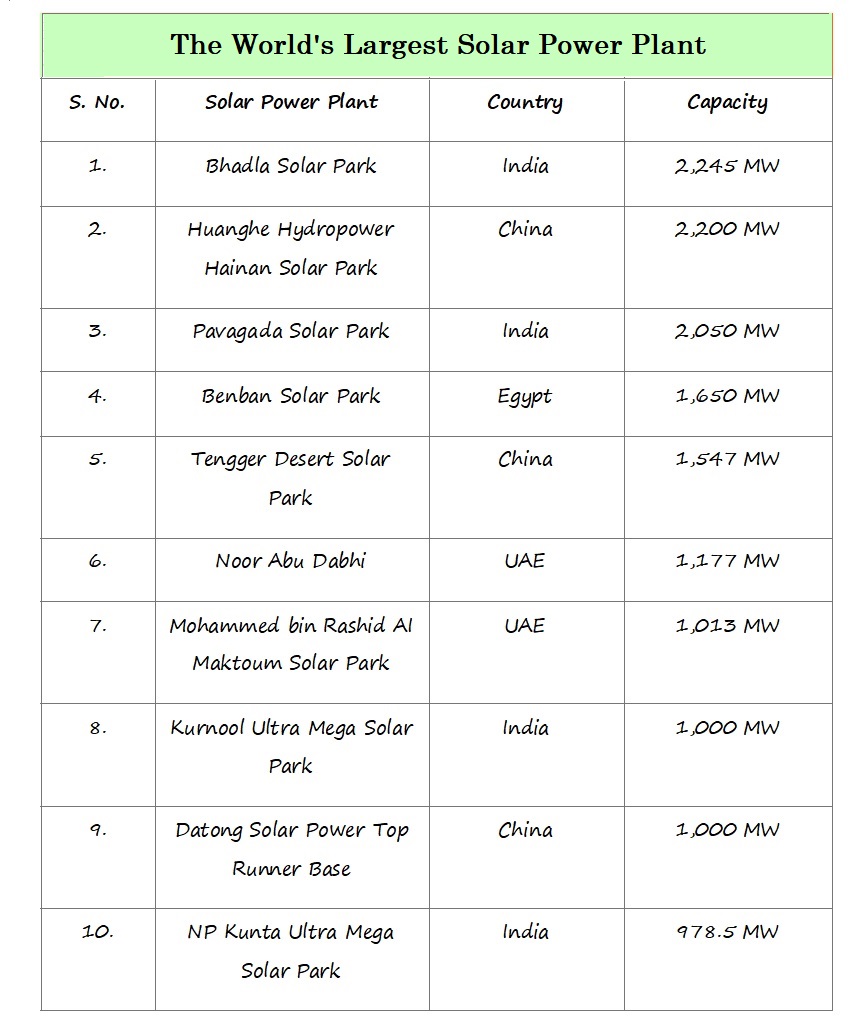
The Bhadla Solar Park in India is the biggest solar power plant in the world. It leads a growing list of large solar stations that are helping countries produce clean energy. Solar power has become one of the most important ways to make electricity without polluting the environment. These solar plants use huge fields of panels that capture sunlight and turn it into power. In this overview, we look at Bhadla Solar Park and the top ten largest solar power plants around the world. Together, they show how far we’ve come in using the sun’s energy to power homes, cities, and industries in a cleaner, greener way.
Source: https://currentaffairs.adda247.com/largest-solar-power-plant-in-the-world-2023/
The World’s Longest Transmission Line
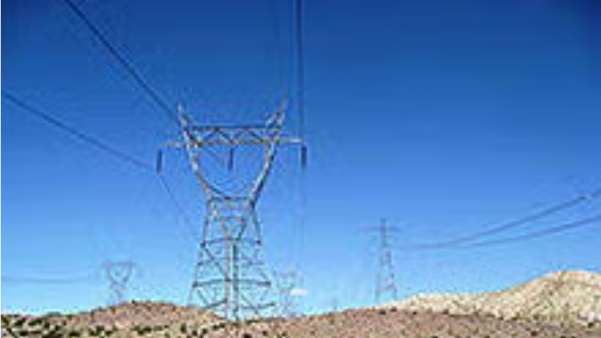
Belo Monte-Estreito transmission line, Brazil – 2,092km Source: https://www.power-technology.com/features/featurethe-worlds-longest-power-transmission-lines-4167964/
The longest power line in the world is in Brazil. It is called the Belo Monte–Rio de Janeiro transmission line and stretches over 2,500 kilometers—about the distance from Lagos to Cairo. This line carries electricity from the Belo Monte hydroelectric dam in northern Brazil to big cities in the southeast, like Rio de Janeiro. It uses a special type of technology called UHVDC, which stands for Ultra-High Voltage Direct Current. This helps move large amounts of electricity over long distances with less energy loss. The line is owned by a company called XRTE, which is part of the State Grid Corporation of China—one of the biggest power companies in the world. There are other long transmission lines worth mentioning too. Brazil’s Rio Madeira line is slightly shorter at 2,385 kilometers and was the longest when it started working in 2013. In China, the Jinping–Sunan line runs for 2,090 kilometers, bringing electricity from the Yalong River to the Jiangsu region. Another Chinese line, the Xiangjiaba–Shanghai transmission line, is 1,980 kilometers long. These massive power lines are important because they help deliver electricity from places where it is made to places where people need it. They are a key part of keeping homes, businesses, and cities running smoothly.
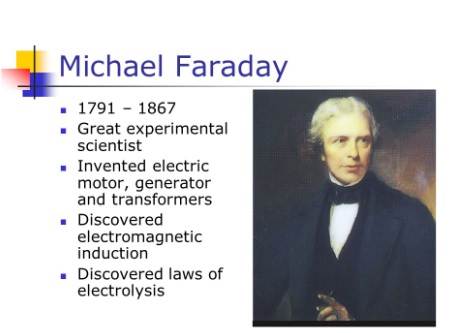
Michael Faraday
Source: https://tuckermiddleschoolstemteam.weebly.com/scientist-of-the-month-of-march.html
In 1831, Michael Faraday, a British scientist known for his work in physics and chemistry, invented the first transformer while exploring a new physical effect he had discovered. He found that changing the strength of a magnetic field near a wire could create an electric current in that wire—even if the wire wasn’t directly connected to the source of the magnetic field. To study this effect more closely, Faraday built on the earlier work of Hans Christian Oersted, a German physicist who had shown that electric currents produce magnetic fields. Faraday wrapped two separate coils of wire around an iron ring, which acted as a magnetic core. The coils didn’t touch each other. When Faraday connected one coil to a battery, the electric current flowing through it created a magnetic field that traveled through the iron ring. This magnetic field reached the second coil and caused a small electric current to appear in it. However, Faraday noticed that this only happened when the battery connection was being opened or closed—meaning the magnetic field had to be changing, not constant. This experiment was the first demonstration of a transformer and helped prove Faraday’s law of electromagnetic induction: a changing magnetic field can produce electricity in a nearby circuit. Although Faraday didn’t realize how useful this invention would become, his research laid the foundation for many future discoveries. It wasn’t until 1882 that Lucien Gaulard from France and John Gibbs from England patented the first transformer designed for practical use.
James Watt’s Contribution to Power Generation
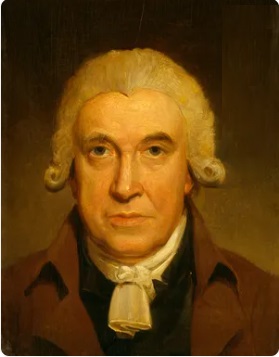
James Watt ( January 19, 1736 — August 25, 1819)
James Watt made several key improvements to the steam engine that changed how power was produced and used. One of his most important ideas was the separate condenser. Before this, steam engines wasted a lot of energy because steam was cooled inside the same cylinder where it was used. Watt solved this by adding a separate part to cool the steam, which made the engine much more efficient and used less fuel. He also created a double-acting piston. This meant steam could push the piston in both directions, not just one. As a result, the engine ran more smoothly and produced stronger, more consistent motion.
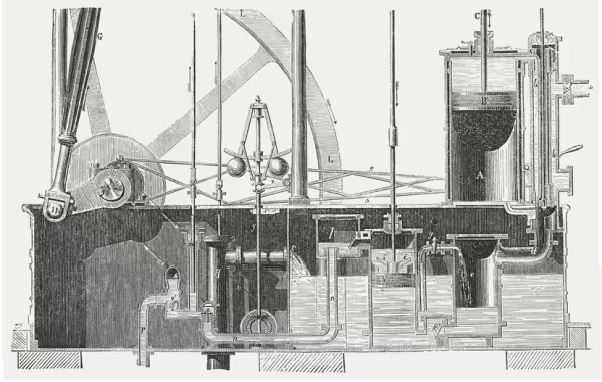
Source: This wood carving depicts James Watts’ double-acting steam engine. Uwe Zänker / Getty Images Source: https://science.howstuffworks.com/innovation/inventions/watt-steam-engine.htm
To make steam engines more useful for machines, Watt invented a gear system called the sun-and-planet gear. It changed the straight-line movement of the piston into rotary motion, which could turn wheels and drive equipment directly. Another smart addition was the centrifugal governor. This device automatically controlled the engine’s speed, helping it run steadily without constant adjustments. Watt’s innovations had a huge impact. His improved steam engine powered factories and mills during the Industrial Revolution, helping to transform manufacturing. It was also used in trains and ships, making travel and transport faster and more reliable. In mining, his engines powered pumps that could remove water from deep underground, making it easier to reach valuable minerals. Even though Watt worked with steam, his ideas laid the groundwork for modern power systems. Later inventors like Thomas Edison and the creators of steam turbines built on Watt’s principles to develop new ways of generating energy. As a lasting tribute, Watt introduced the term “horsepower” to measure engine power, and the unit of power called the “watt” was named after him.
Ampère, André Marie’s contribution to electricity
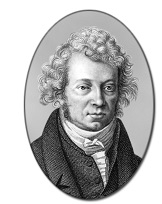
Ampère, André Marie (1775–1836)
André-Marie Ampère was a pioneering scientist who helped create the field of electromagnetism by showing how electricity and magnetism are closely connected. He was the first to develop a full scientific theory that explained how these two forces interact, which was a major breakthrough in physics. One of his key achievements was Ampère’s Law, which describes how electric currents in wires produce magnetic forces. This law helped scientists understand how electricity can create magnetism and laid the groundwork for many modern technologies. Ampère also invented the galvanometer, a tool used to measure electric current by detecting its magnetic effects. This device became essential in electrical experiments and engineering. Building on earlier discoveries—like Hans Christian Ørsted’s finding that electricity affects a compass needle—Ampère carried out detailed experiments and developed mathematical formulas to explain how electric currents generate magnetic fields. To honor his contributions, the standard unit of electric current is named the “ampere.” His work made it possible to create practical tools like electromagnets and electric motors, which are now used in everything from household appliances to industrial machines. Ampère’s legacy lives on in the technologies we rely on every day, and his discoveries remain central to our understanding of electricity and magnetism.
Thomas Edison’s Contribution to Electricity

February 11, 1847 to October 18, 1931
Thomas Edison played a major role in bringing electric light and power into everyday life. His most important achievement was creating the first practical incandescent light bulb—one that could shine for hours using a carbon filament. While others had tried to make light bulbs before him, Edison’s version was the first that worked well enough to be used in homes and businesses. But Edison didn’t stop at the light bulb. He also built the first full system to deliver electricity to people. This included powerful generators to produce electricity, wires and switches to carry it safely, and meters to measure how much was used. In 1882, he opened the Pearl Street Power Station in New York City, the first commercial power plant to supply electricity to multiple customers. It was a huge step toward the modern electric grid. Edison’s work launched the Electric Age. His system made it possible for homes, factories, and cities to use electric lighting and power, changing how people lived and worked. The tools and ideas he introduced—like light switches, sockets, and meters—became the foundation for many of the electric technologies we rely on today. His contributions didn’t just light up rooms—they lit the way for future inventions and helped shape the electrified world we live in now.
The World’s Largest Dam
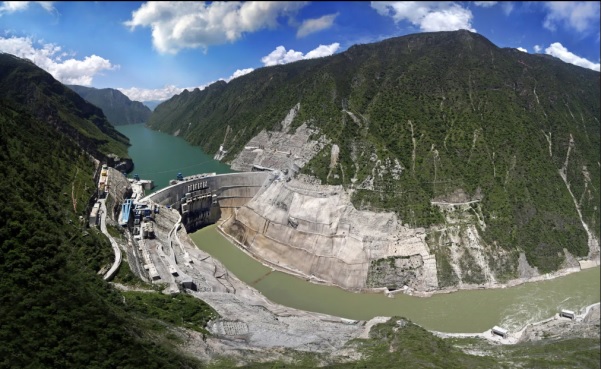
World’s tallest human-made dam Jingping-I Dam located at the Jinping Bend of the Yalong River, Sichuan province, China. Source: https://www.britannica.com/topic/Jingping-I-Dam
Dams are some of the largest and most impressive structures ever built by humans. They’re made by piling up huge amounts of earth, rock, concrete, and other materials to block rivers or hold back lakes. But dams aren’t just about size—they play a big role in everyday life. They store water for drinking and farming, help produce electricity through hydropower, protect towns from flooding, and create lakes where people can boat, fish, or relax. When people talk about the “biggest” dams, they might mean different things. Some focus on how tall the dam is, others look at how much material was used to build it, how much water it holds, or how much electricity it can generate. So ranking dams isn’t always straightforward. One standout example is the Jinping-I Dam in China. It’s currently the tallest dam in the world, built on the Yalong River. It reaches a height of 305 meters (1,000 feet)—that’s even taller than the Eiffel Tower. The top of the dam stretches 569 meters (1,867 feet) across the river. Construction began in 2005, and by 2013, the first part of its power station was up and running. It’s a powerful symbol of how modern engineering can shape the way we use and manage natural resources.
The World’s Oldest Geothermal Power Plant
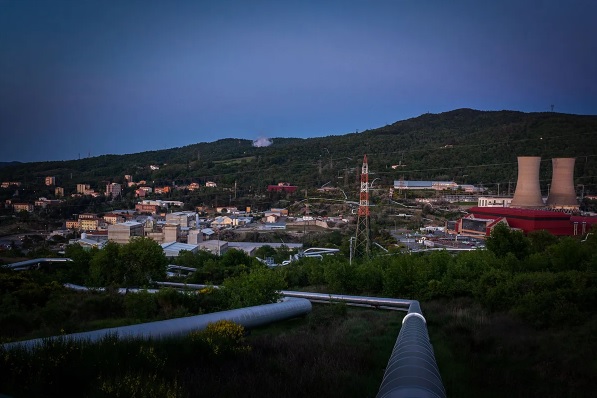
A general view of the Larderello power plant, the world’s first geothermal power plant commissioned in 1913. The cooling towers can be seen on the right of the image. Photo by Luigi Avantaggiato https://www.sciencefocus.com/planet-earth/first-geothermal-power-plant
The Larderello power plant, located in Tuscany—a region in central Italy—is recognized as the oldest geothermal power facility in the world. It began operating in 1913 and has grown to include 34 separate plants, which together can produce around 800 megawatts of electricity. That is enough energy to supply power to millions of homes and businesses across Tuscany. Deep beneath the Earth’s surface, natural gases and steam build up pressure and escape through cracks in the ground. At Larderello, engineers have drilled pipes deep into the earth to capture this hot steam and fluid, which can reach temperatures between 130°C and 160°C. This steam is then used to spin turbines, which generate electricity—similar to how steam powers old-fashioned locomotives, but on a much larger scale. Before the plant was built, the area around Larderello was considered difficult to live in due to its rugged terrain and volcanic activity. But by tapping into the underground heat, the region was turned into a global symbol of renewable energy. It showed how even challenging landscapes could be used to produce clean, sustainable power. For many years, Larderello was the only place in the world producing geothermal energy on a commercial scale. It held this unique status until 1958, when New Zealand opened its own geothermal power station, marking the beginning of a broader global interest in this form of energy.
The Oldest Power Station in Nigeria: Ijora Thermal Station
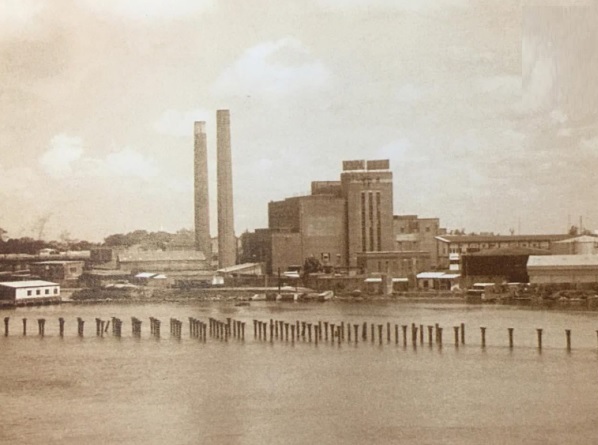
Ijora Power Station