

















Several Codes
Ensuring orderliness and discipline in the
Nigeria Electricity Supply Industry
Grid Code

Grid Code Glossary
Distribution Code
Metering Code

Health and Safety Code
Market Rules
Independent Power Producers – IPPs
Renewable Energy
Electricity Supply in Nigeria – A Brief History
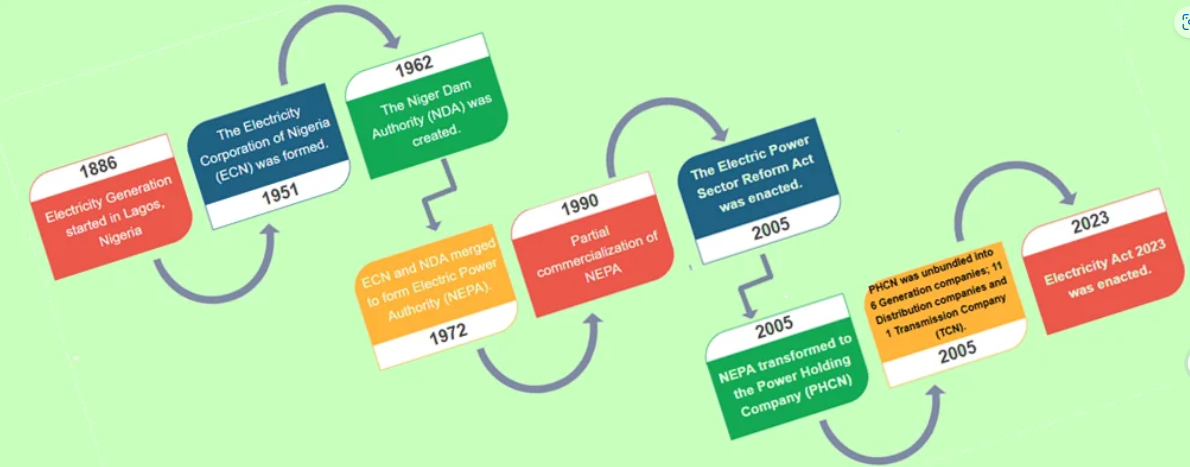
Electricity generation in Nigeria started in 1886 with two generators in Lagos. The Electricity Corporation of Nigeria (ECN) was formed in 1951 by an Act of Parliament, and the Niger Dams Authority (NDA) was created in 1962 for hydroelectric power.
In 1972, ECN and NDA merged to form the National Electric Power Authority (NEPA), responsible for generating, transmitting, and distributing electricity nationwide.
In 1990, NEPA underwent partial commercialization and the authority was divided into four independent divisions: Generation and Transmission; Distribution and Sales; Engineering; and Finance and Administration.
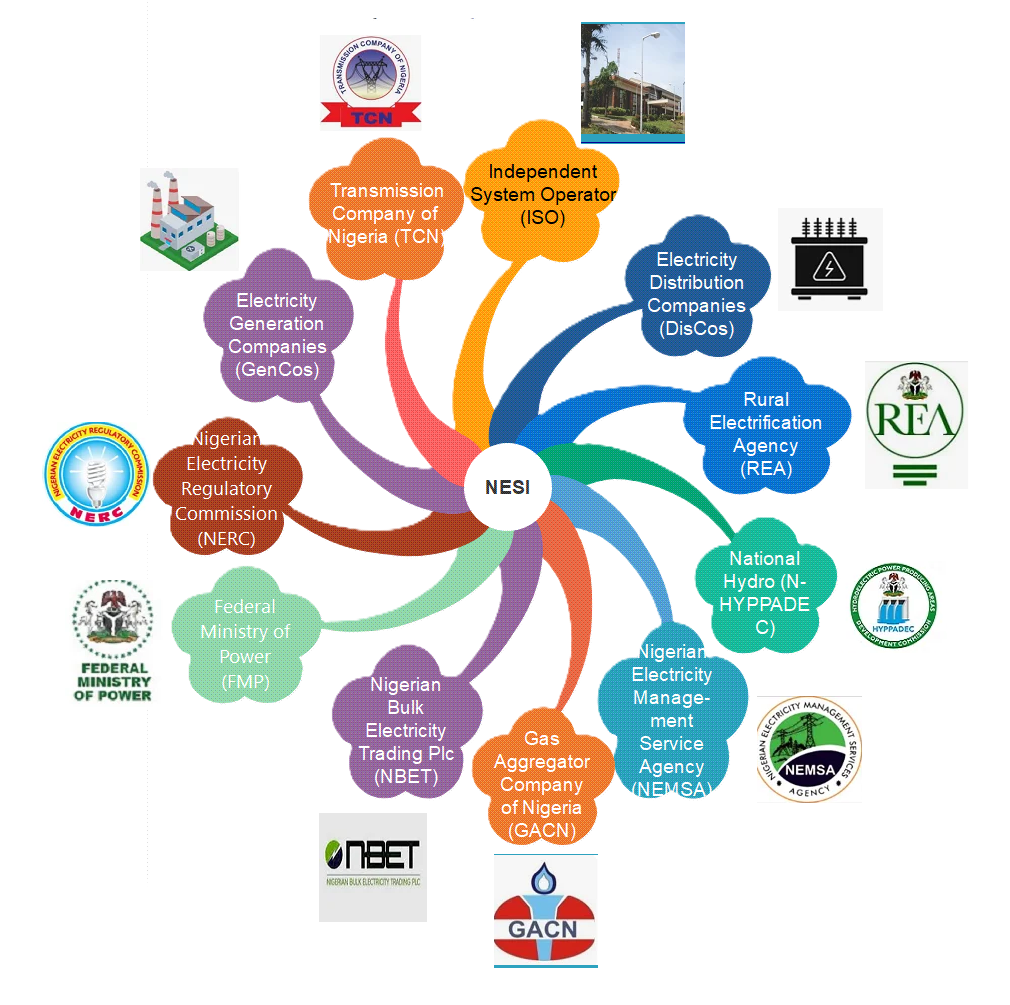
NEPA was restructured in 2005 into the Power Holding Company of Nigeria (PHCN) due to power sector reforms. The Electric Power Sector Reform (EPSR) Act 2005 allowed private companies to take part in electricity generation, transmission, and distribution. Federal Government unbundled PHCN into 11 distribution companies (DisCos), 6 generation companies (GenCos), and a transmission company (TCN). The Nigerian Electricity Regulatory Commission (NERC) was also established as an independent regulator. The transmission company is still government-owned.
In 2023, the EPSR Act 2005 was replaced with the new Electricity Act 2023. The Electricity Act 2023 further unbundled Nigeria’s electricity industry. Unlike the EPSR Act 2005, it allows Nigerian states to generate, transmit, and distribute electricity if they choose. They can also create their own independent electricity regulatory commissions.
Activities in the Nigeria Electricity Supply Industry

Installation of Generating units (Hydro, thermal, renewable), substation transformers, transmission lines, circuit breakers of all sizes, distribution transformers and lines

Maintenance of Generating units (hydro, thermal, renewable), substation transformers, transmission lines, circuit breakers of all sizes, distribution transformers and lines

Energy Monitoring & Management, Power System Operations, Planning, Smart Meters
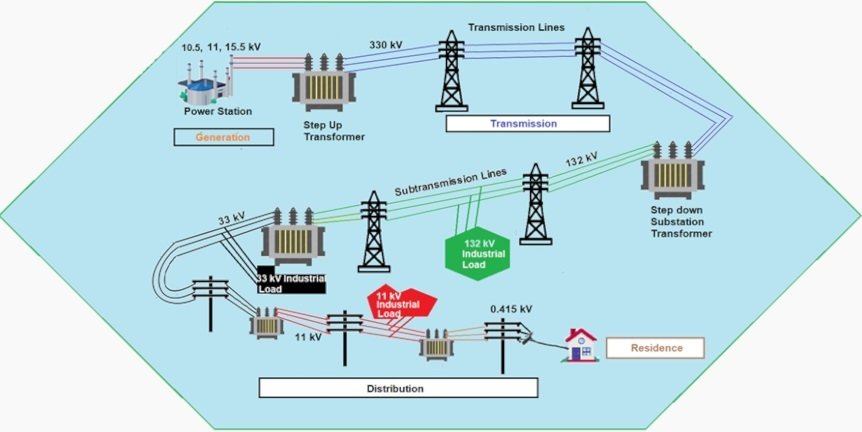
An overview of the Nigeria Electricity Network from the power station voltage of 10.5 kV to 15.5 kV then stepped up to the transmission voltage of 330 kV . The transmission voltage of 330 kV is stepped down to 132 kV and gradually stepped down further until the residential voltage of 240 V is attained.